Anxiety is the most common mental health condition worldwide, affecting an estimated 301 million people according to the World Health Organization. Yet for many people — whether due to personal preference, mild-to-moderate symptom severity, medication side effects, or cost — pursuing anxiety management techniques that do not involve prescription drugs is a reasonable, clinically supported goal.
This article does not argue that medication is wrong or unnecessary. For moderate-to-severe anxiety disorders, pharmacotherapy is often essential and can be life-changing. What it does argue is that the evidence for several non-pharmacological strategies is solid, specific, and actionable — and that most people with anxiety are not using these strategies as systematically as they could be.
understanding anxiety disorders
What Anxiety Actually Is — and When It Becomes a Problem
Anxiety is not simply “feeling stressed.” At the neurobiological level, it is a coordinated threat-response system involving the amygdala, hypothalamus, and the autonomic nervous system. When the brain perceives a threat — real or imagined — the hypothalamic-pituitary-adrenal (HPA) axis releases cortisol and adrenaline, preparing the body to fight or flee. Heart rate rises, breathing shallows, muscles tense, and attention narrows.
This system is adaptive. It kept our ancestors alive. The problem arises when the alarm fires too often, too intensely, or in the absence of real danger — which is exactly what happens in clinical anxiety disorders, including generalised anxiety disorder (GAD), panic disorder, social anxiety disorder, and specific phobias.
The Diagnostic and Statistical Manual of Mental Disorders (DSM-5) distinguishes anxiety disorders from ordinary worry primarily on the basis of duration (symptoms present for six months or more), intensity (difficult to control), and functional impairment (interfering with work, relationships, or daily life).
If you recognise yourself in that description, the strategies below are evidence-backed and worth pursuing — ideally alongside, not instead of, a conversation with your doctor or a licensed mental health professional.
What the Research Says About Natural Anxiety Relief
The evidence base for non-pharmacological anxiety management has expanded substantially over the past two decades. Here is what the strongest research actually shows.
Exercise: One of the Most Replicated Findings in Anxiety Research
A 2023 meta-analysis published in JAMA Psychiatry, which pooled data from 97 randomised controlled trials covering more than 10,000 participants, found that physical activity significantly reduced anxiety symptoms across all anxiety disorder subtypes. The effect size was moderate (SMD −0.58), placing it in a clinically meaningful range. Aerobic exercise and resistance training both showed benefits, though aerobic exercise had a slightly larger effect in most subgroup analyses.
A separate 2021 RCT published in Frontiers in Psychiatry compared aerobic exercise to a waitlist control in adults with GAD and found that 12 weeks of moderate-intensity cycling (three sessions per week, 45 minutes each) reduced HAM-A anxiety scores by an average of 8.4 points — a reduction considered clinically significant by most diagnostic frameworks.
The mechanism is not simply distraction. Exercise downregulates HPA-axis reactivity, increases hippocampal neurogenesis, and raises levels of brain-derived neurotrophic factor (BDNF), all of which contribute to improved emotional regulation over time.
Cognitive Behavioural Therapy: The Gold Standard Non-Drug Intervention
CBT for anxiety works by identifying and restructuring the cognitive distortions — catastrophising, overestimating threat, underestimating coping ability — that maintain anxious thinking. It also involves systematic exposure to feared situations, which gradually reduces the conditioned fear response.
A landmark 2018 meta-analysis in Psychological Medicine, covering 41 RCTs and 2,843 participants, found CBT produced large effect sizes (Cohen’s d = 1.22) compared to control conditions for GAD, and that gains were maintained at 12-month follow-up. Critically, this analysis found CBT comparable to medication for mild-to-moderate anxiety, and superior to medication alone at follow-up — suggesting CBT produces more durable change.
Internet-delivered CBT (iCBT) shows similar efficacy to face-to-face therapy in several large RCTs, making it a genuinely accessible option. online therapy options
Mindfulness-Based Stress Reduction (MBSR)
MBSR is an eight-week structured programme developed by Jon Kabat-Zinn that combines body scanning, seated meditation, and mindful movement. A 2021 RCT published in JAMA Internal Medicine compared MBSR directly to the antidepressant escitalopram (a common anxiety treatment) in 276 adults with anxiety disorders. After eight weeks, both groups showed equivalent reductions in anxiety, with MBSR showing a slight advantage in secondary outcomes including self-reported wellbeing. This is one of the first head-to-head RCTs comparing MBSR to medication, and its findings are significant.
The proposed mechanism involves strengthening prefrontal cortex regulation of the amygdala — essentially, training the brain’s “brake” on the threat response. fMRI studies support this model, showing reduced amygdala reactivity in long-term meditators.
Diaphragmatic Breathing and Heart Rate Variability (HRV) Biofeedback
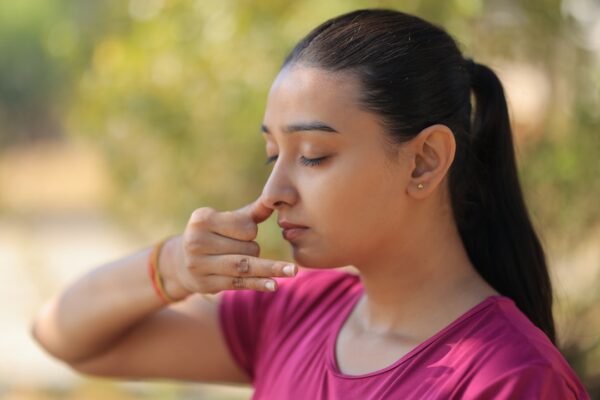
Slow, diaphragmatic breathing at approximately 5–6 breaths per minute stimulates vagal tone via the cardiorespiratory reflex, activating the parasympathetic nervous system and countering the physiological arousal of anxiety. A 2017 RCT in Frontiers in Psychology found that eight weeks of daily slow-breathing practice (20 minutes per day) significantly reduced self-reported anxiety and salivary cortisol compared to a relaxation control group.
HRV biofeedback, which uses real-time feedback to help individuals optimise their breathing rhythm, has been validated in a 2013 meta-analysis in Applied Psychophysiology and Biofeedback covering 24 studies, showing moderate-to-large effect sizes for anxiety reduction. Several consumer-grade devices now make this technique accessible outside clinical settings.
Dietary Factors: Promising but Preliminary
The gut-brain axis has attracted significant research attention. A 2022 systematic review in Nutrients found associations between higher dietary fibre intake, fermented food consumption, and lower anxiety symptom scores, but noted that most studies were observational and causality remains unestablished. Magnesium deficiency has been linked to heightened anxiety in population studies, and a 2017 systematic review in PLOS ONE found low-quality evidence supporting magnesium supplementation for subjective anxiety — though the authors cautioned that study quality was poor and results should be interpreted conservatively.
Caffeine is worth addressing directly: a 2021 review in Neuroscience & Biobehavioral Reviews confirmed that caffeine at doses above 400 mg/day reliably worsens anxiety symptoms in anxiety-prone individuals by blocking adenosine receptors and increasing cortisol. Reducing caffeine intake is one of the more straightforward dietary changes with a reasonable evidence base.
How to Apply This Practically: A Step-by-Step Protocol
The research points to a layered approach. Here is how to build it systematically, in order of evidence strength and accessibility.
Step 1: Establish a Movement Baseline (Weeks 1–2)
Begin with 20–30 minutes of moderate-intensity aerobic exercise (brisk walking, cycling, swimming) at least three times per week. “Moderate intensity” means you can speak in short sentences but could not sing. Do not begin with high-intensity training — evidence suggests this can temporarily worsen anxiety in deconditioned individuals due to elevated sympathetic arousal. Increase gradually to 150 minutes per week over four to six weeks.
Step 2: Learn One Breathing Technique and Use It Daily (Weeks 1–4)
The 4-7-8 technique (inhale for 4 counts, hold for 7, exhale for 8) or simple box breathing (4 counts in, 4 hold, 4 out, 4 hold) are both well-tolerated starting points. Practise for five minutes twice daily — once in the morning and once when you notice anxiety rising. Consistent daily practice matters more than duration per session.
Step 3: Access CBT — In Person, Online, or via a Validated App (Weeks 2 Onward)
If you can access a therapist trained in CBT, this is the highest-yield single intervention. If cost or availability is a barrier, several digital programmes have published efficacy data, including Headspace, Woebot, and structured iCBT programmes through platforms like This Way Up (Australia) or Silvercloud (UK/US). Look for programmes that include thought records and exposure exercises — these are the active ingredients.
Step 4: Audit Sleep and Caffeine
Sleep deprivation directly increases amygdala reactivity and reduces prefrontal regulation — a 2007 study in Current Biology demonstrated this in healthy adults after one night of sleep restriction. Aim for seven to nine hours. If you consume more than 200 mg of caffeine daily (roughly two standard cups of coffee) and have anxiety, a gradual reduction over two to three weeks is worth trialling.
Step 5: Consider an MBSR Programme (Month 2 Onward)
The full eight-week MBSR programme requires approximately two to three hours per week of practice plus one longer session. Free and low-cost versions are available online. Even abbreviated mindfulness practice (10–15 minutes daily) has shown benefits in multiple RCTs, though the full programme has the strongest evidence base.
| Strategy | Evidence Level | Typical Time to Effect | Accessibility |
|---|---|---|---|
| Cognitive Behavioural Therapy (CBT) | Strong (multiple RCTs, meta-analyses) | 6–12 weeks | Moderate (cost/waitlists vary) |
| Aerobic Exercise | Strong (multiple RCTs, meta-analyses) | 4–12 weeks | High |
| MBSR / Mindfulness | Moderate-Strong (several RCTs) | 8 weeks | Moderate-High |
| Diaphragmatic Breathing | Moderate (RCTs, smaller samples) | Days to weeks (acute) / weeks (chronic) | Very High |
| HRV Biofeedback | Moderate (meta-analyses) | 4–8 weeks | Moderate (device cost) |
| Dietary Changes (fibre, reduced caffeine) | Weak-Moderate (observational/preliminary) | 2–6 weeks | High |
| Magnesium Supplementation | Weak (low-quality RCTs) | 4–8 weeks | High |
Common Mistakes People Make Managing Anxiety Without Medication
Understanding what not to do is just as important as knowing what works.
1. Using Avoidance as the Primary Coping Strategy
Avoiding situations that trigger anxiety provides short-term relief but reinforces the anxiety response long-term. This is one of the most well-documented maintenance mechanisms for anxiety disorders. Every time you avoid a feared situation, the brain updates its model: “That threat was real and I survived by escaping.” Gradual exposure — the opposite of avoidance — is how anxiety is systematically reduced. If your default strategy is avoidance, no amount of breathing exercises will provide lasting relief.
2. Expecting Immediate Results
Unlike a benzodiazepine, which can reduce anxiety within 30 minutes, non-pharmacological approaches work through neuroplasticity and habit formation. The research consistently shows that meaningful reductions in anxiety scores begin emerging at four to six weeks of consistent practice, with larger effects at 12 weeks. People who abandon these strategies after two weeks because they “don’t feel different” are leaving before the evidence says results should appear.
3. Treating Non-Medication Approaches as Incompatible with Professional Help
The evidence strongly supports combination approaches. CBT plus exercise, for instance, outperforms either alone in several trials. And for moderate-to-severe anxiety, combining these strategies with medication and therapy produces better outcomes than any single intervention. If your anxiety is significantly impairing your functioning, please speak with a doctor or mental health professional — the strategies in this article are not a substitute for clinical care in that context.
4. Relying Exclusively on Apps Without Structured Skill-Building
Consumer mindfulness apps vary widely in their evidence base. Many have been tested only in non-clinical populations for general stress, not anxiety disorders. An app that guides you through pleasant body scans is not the same as a structured CBT programme that teaches you to challenge catastrophic thinking. Use apps as supplements, not as the whole strategy.
5. Not Addressing Sleep
Sleep and anxiety have a bidirectional relationship: anxiety disrupts sleep, and sleep deprivation worsens anxiety. Many people focus on daytime anxiety management while leaving their sleep hygiene unaddressed. Cognitive Behavioural Therapy for Insomnia (CBT-I) is as evidence-based as CBT for anxiety and often improves anxiety as a secondary outcome. improving sleep quality
6. Inconsistent Practice
The research supporting exercise, mindfulness, and breathing techniques is based on consistent, regular practice — not occasional use during crisis moments. The brain changes underlying anxiety reduction (increased vagal tone, improved prefrontal regulation, reduced HPA reactivity) accumulate over weeks and months of regular engagement, not sporadic sessions.
Expert Recommendations
Clinical guidelines from major health bodies converge on several key points for anxiety management without medication:
The National Institute for Health and Care Excellence (NICE) in the UK recommends individual high-intensity CBT as a first-line treatment for GAD, noting that it should be offered before pharmacotherapy in many cases. Their guidelines explicitly endorse psychoeducation, structured problem-solving, and active monitoring as initial steps.
The American Psychological Association (APA) clinical practice guidelines for PTSD (which shares mechanisms with anxiety disorders) rate exposure-based therapies as having the strongest evidence base, with cognitive therapies close behind.
The World Health Organization’s Mental Health Gap Action Programme recommends structured psychological interventions, including CBT and behavioural activation, as first-line treatments for anxiety in low- and middle-income settings — partly because they can be delivered by non-specialist health workers without medication access.
Leading clinical researchers in anxiety — including Dr. Stefan Hofmann at Boston University, one of the most-cited CBT researchers globally — have consistently noted in published commentaries that the biggest gap in anxiety treatment is not the existence of effective non-pharmacological tools, but the failure to deliver them consistently and accessibly to people who need them.
Frequently Asked Questions
How quickly can I expect to feel less anxious using natural approaches?
This depends on the technique and your baseline severity. Diaphragmatic breathing can produce an acute calming effect within minutes by stimulating the parasympathetic nervous system — though this is a short-term response. For sustained reductions in baseline anxiety, the research suggests four to twelve weeks of consistent practice with exercise, CBT, or MBSR before expecting meaningful change. If you have been practising consistently for eight weeks without improvement, that is a signal to consult a clinician rather than persist with the same approach.
Is it safe to manage anxiety without medication if my symptoms are severe?
Non-medication strategies are appropriate and evidence-based for mild-to-moderate anxiety. For severe anxiety — especially if it involves panic attacks that are frequent and disabling, significant functional impairment, or any co-occurring depression — managing without professional support carries real risk. Untreated severe anxiety can worsen over time and increase the risk of depression. Please speak with a doctor or psychiatrist. Choosing non-medication approaches does not preclude professional involvement; a good clinician can help you pursue evidence-based strategies whether or not medication is part of the picture.
Do supplements like ashwagandha or valerian root actually work for anxiety?
The evidence is limited but not entirely absent. A 2019 RCT published in Medicine found that ashwagandha root extract (240 mg/day) significantly reduced perceived stress and morning cortisol levels compared to placebo over 60 days. However, the study was small (n=60), industry-funded, and used subjective outcomes. A 2021 Cochrane review of valerian for anxiety found insufficient evidence to draw reliable conclusions. These supplements are not first-line recommendations, their long-term safety profiles are incompletely studied, and they should not replace strategies with stronger evidence. If you are considering them, discuss with your doctor — some interact with medications.
Can anxiety be managed naturally long-term, or does it always come back?
For many people, the skills learned through CBT and the neurobiological changes produced by consistent exercise and mindfulness practice create durable improvements. The 2018 meta-analysis in Psychological Medicine cited earlier found that CBT gains were largely maintained at 12-month follow-up, with relapse rates lower than those seen with medication after discontinuation. That said, anxiety disorders have a tendency to recur under high stress, and ongoing maintenance of these habits — rather than treating them as a course of treatment with an end date — is associated with better long-term outcomes. Think of it less like a prescription and more like an ongoing practice.
The Bottom Line
The evidence for reducing anxiety without medication is robust for several specific strategies — particularly CBT, regular aerobic exercise, and mindfulness-based practices — and is promising for breathing techniques and select lifestyle modifications. These are not soft alternatives to “real” treatment; in multiple RCTs and meta-analyses, they produce clinically significant reductions in anxiety that are at least comparable to medication for mild-to-moderate presentations and more durable after treatment ends. The key is applying them consistently and systematically, addressing the avoidance behaviours that maintain anxiety, and knowing when professional support is the right next step.
and does not constitute medical advice, diagnosis, or treatment. Always consult a
qualified healthcare provider before making changes to your diet, exercise routine,
supplement regimen, or any other health-related decisions.